
Billing is created from the transactions
Selling and redeeming a voucher are transactions. In Awiti Flow, fees, invoices, and credit notes are created from them - not from slips of paper and Excel lists. The network starts the billing run.
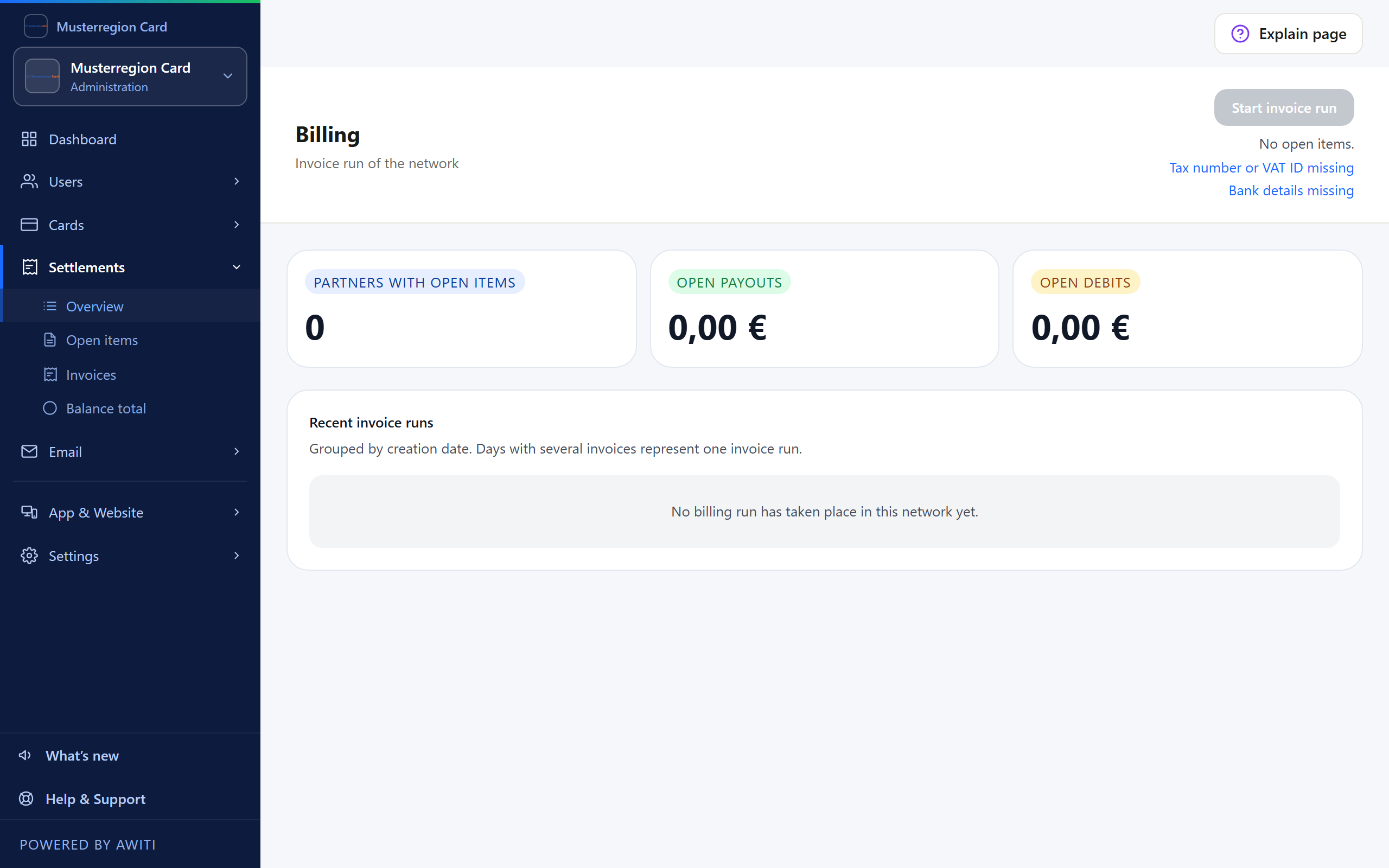
Two invoicing flows, one source
Awiti Flow has two invoicing flows. The platform invoices the network for its fees. The network invoices the businesses for what it has set itself. The invoices to the businesses are created from the transactions. Amounts do not have to be copied by hand from one list to another.
- Platform to network: Awiti's fees.
- Network to businesses: the fees that the network sets.
- Employers receive a consolidated invoice for their benefit payments.
- Merchants see their sales and invoices in the Partner Portal.
The network sets the fees for businesses
The network decides what merchants and employers pay to the network. In the network admin, you set the fees separately by type of business. You can define exceptions for individual businesses. The invoice to the business follows this setting.
What stays with the network
The network runs the system itself. Awiti provides the platform, updates, monitoring, and support for the network as operator. Four tasks are yours.
- Billing run: The network starts the billing run in the network admin. The transactions of a period are turned into invoices and credit notes to the businesses, with fees, VAT, and payment terms.
- Accounts: The network enters its escrow account, its fee account, and its SEPA creditor ID itself in the network admin.
- Merchants: The network reaches out to them and approves them.
- Issuing: The network is the issuer of the voucher. Its terms apply to buyers and businesses.
General information, not legal or tax advice. As of October 8, 2026.
If a local service provider is to take over operation, that is possible on request.
Account and archive
- Escrow account
- The money from voucher sales goes to the escrow account that the network holds at its bank.
- Where the numbers come from
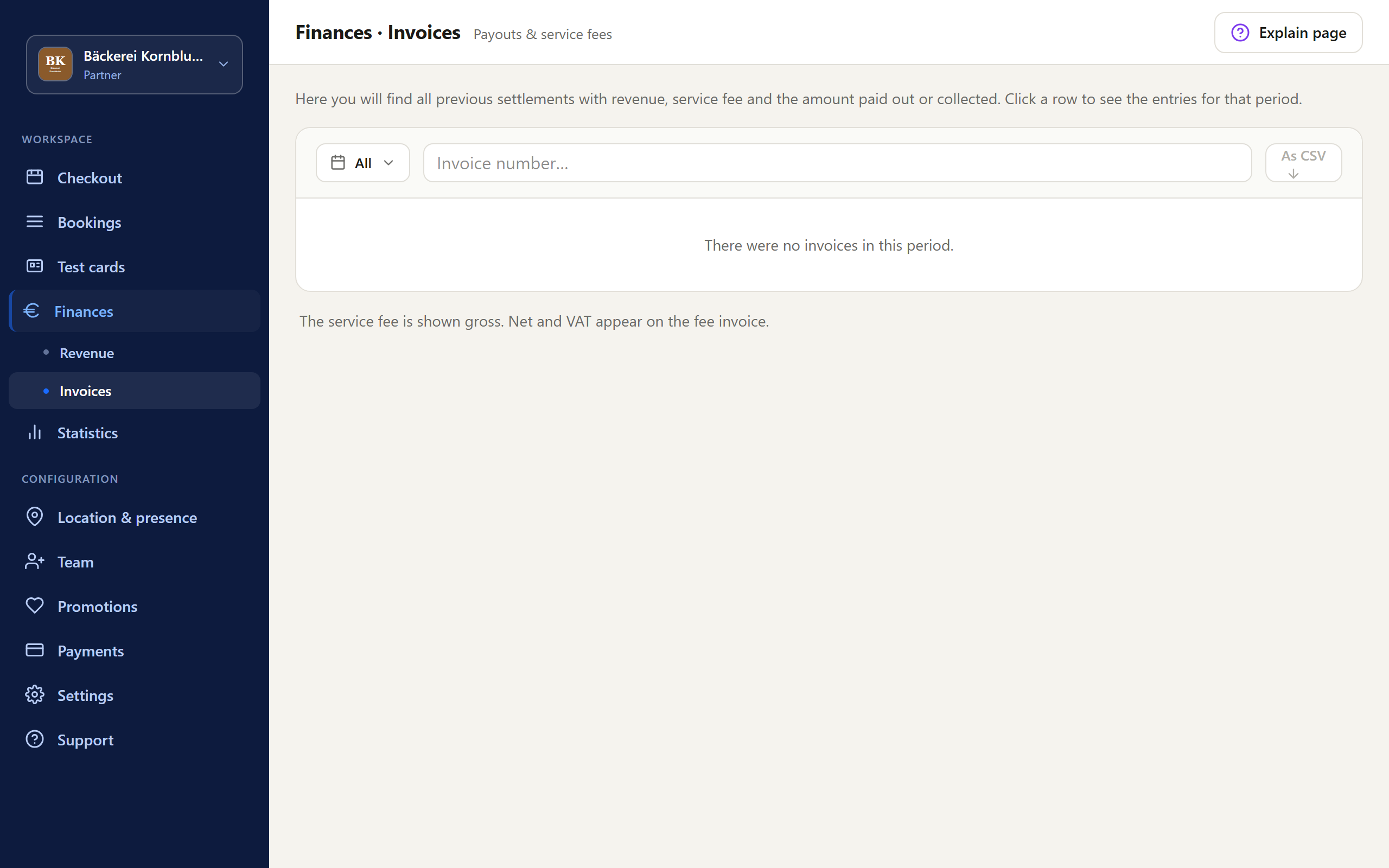
- Invoices are based on transactions. Merchants see sales and invoices in the Partner Portal.
- Invoice archive
- When migrating from the previous Awiti platform, the invoice archive is carried over.
Questions and answers
Who invoices the merchants?
The network. The network's invoices and credit notes to the businesses are created in Awiti Flow from the transactions. Awiti invoices the network for its fees.
How much manual work is left for us?
You start the billing run; the invoices are created from the transactions. On top of that, you maintain your accounts in the network admin and reach out to and approve merchants.
Can we set different fees for individual businesses?
Yes. The fees can be set per type of business, and you can define exceptions for individual businesses.
What happens to the invoices from our current system?
When migrating from the previous Awiti platform, the invoice archive is carried over. We check against your data what can be carried over from your current system, before you decide.
Related
Your voucher, your name, your rules.
We provide the system that does the work.