.svg)

.svg)

.svg)
Digitalization in retail requires critical mass locally
A guest contribution by university professor Dr. Dr. Björn Niehaves about digitization in retail.
Many regional retailers know their standpoint in digitization, they want to change something, want to jump on the bandwagon of the digital age and make a difference. The focus is not on your own profit, but on maintaining the local infrastructure.
However, if you ask cities or municipalities, this is not the standard voice. If there are only seven or eight retailers in a city out of 100 who really want to take on a regional funding project, a region lacks critical mass and is therefore an extremely important factor for the success of digitization in retail.
The importance of the critical mass on site can easily be compared with the importance of a balloon. A balloon alone is not a party; it is only the multitude of balloons that creates a feeling of celebration. A one-off retailer will therefore hardly be able to bring about a digitization revolution in the region. A critical mass must be formed that is interested in progress together and is aware that the first breath when inflating a balloon is the hardest. Metaphorically thought of here again. Finding a start, developing concepts, strategies and technologies is the first step. But all subsequent steps will be easier.
Digitalization is always a means to an end, nothing more and nothing less, and information technologies have always existed. But the intention behind the technologies with regard to digitization in regional retail has changed. The technologies are now geared and tailored closer to and for the citizens, customers and business processes of a region. They are increasingly developing in the direction of making a real target contribution to end customers and usability in various areas. This is partly due to the fact that consumer technologies such as cell phones and tablets are becoming increasingly universal and cheaper, thus continuing to promote the technology. Options such as shift planning via WhatsApp would have been inconceivable a few years ago.
“After critical mass, there are two essential ingredients for being able to help shape the digital transformation, to be able to help shape it, this”
In Amsterdam, for example, there is a birdhouse attached to a tree in the city center that activates public WiFi as soon as relatively good air quality is achieved. This is an unusual, innovative idea to draw attention to an environmental problem that exists all over the world. Of course, this bird house has nothing to do with the digitization of retail trade in Siegen. The crux of the matter is that the visibility and proximity of such projects to citizens are of course completely different in every country, municipality or region. What makes sense in a particular city is completely superfluous in the next city. The benefits for regional development must therefore be defined, specific thinking must be taken into account and specific goals that make sense for the region must be set so that solutions can be offered to the critical mass and problems can be scaled.
An important, critical mass has built up in the Siegen region and the retail digitization project - “Lozuka” - was launched three years ago. Since then, the platform has developed successfully and effectively supports regional trade. With now 30 retailers, over 1 million products are currently combined on one marketplace, including free same-day delivery. Retailers in Siegen have become active co-designers and see Lozuka as an important part of their everyday lives.
I examined the topic in the Siegen region as part of the survey about the future of trade and the (possible) role of Lozuka. End customers were asked about their purchase on Lozuka, non-customers about their lack of interest. The study has shown that the desire to shop regionally on Lozuka can be seen by consumers as a true alternative to other online department stores. In addition, one of the main findings turned out to be that customers who have ordered from Lozuka once will tend to order from Lozuka again and rarely get away from it again. It has also been shown that there are a large number of customers who have not yet ordered from Lozuka but would like to. The platform's potential has therefore not yet been exhausted and now has the opportunity to continue to grow.

ABOUT THE AUTHOR:
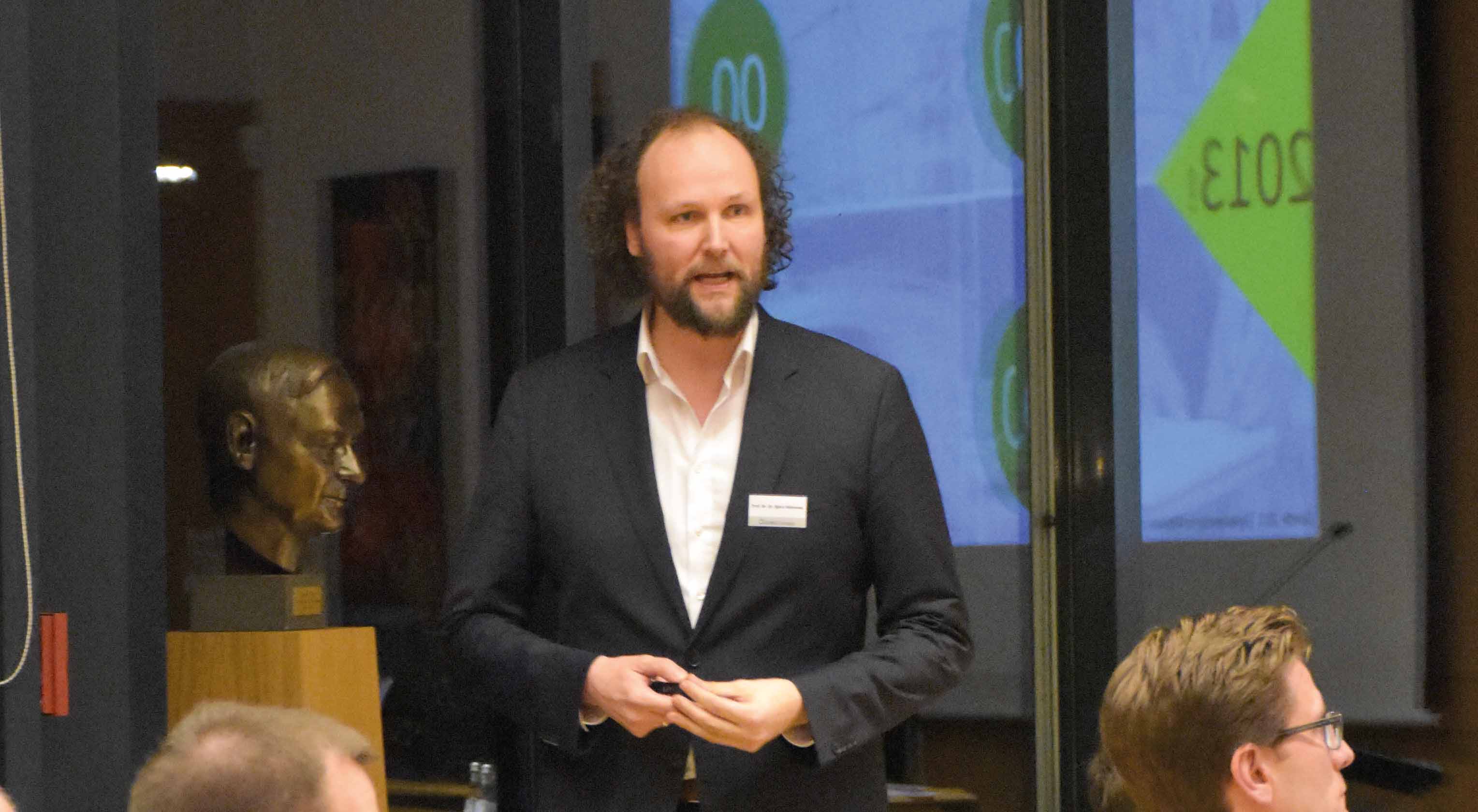
University professor Dr. Dr. Björn Niehaves stands for the topic of digital innovations and their significance for entrepreneurial value creation. After stints at Harvard, the London School of Economics and the Copenhagen Business School, among others, he now holds the Chair of Business Informatics and Director of the Research College at the University of Siegen. He also serves as board member of the Siegen SME Institute and as a member of the digitization advisory board of the NRW state government. In the latter role, he also supports projects in the area of data-driven business models in retail on behalf of the NRW Ministry of Economics and Digitalization. In addition to his research activities, he advises leading companies, in particular on their strategy development and executive training for digitization.
.svg)

.svg)